

Synchronous Condenser
The advent of using Solar and Wind Power energy as Renewable energy has brought on grid instability problems , such as frequency fluctuation, harmonics generation and Voltage instability.
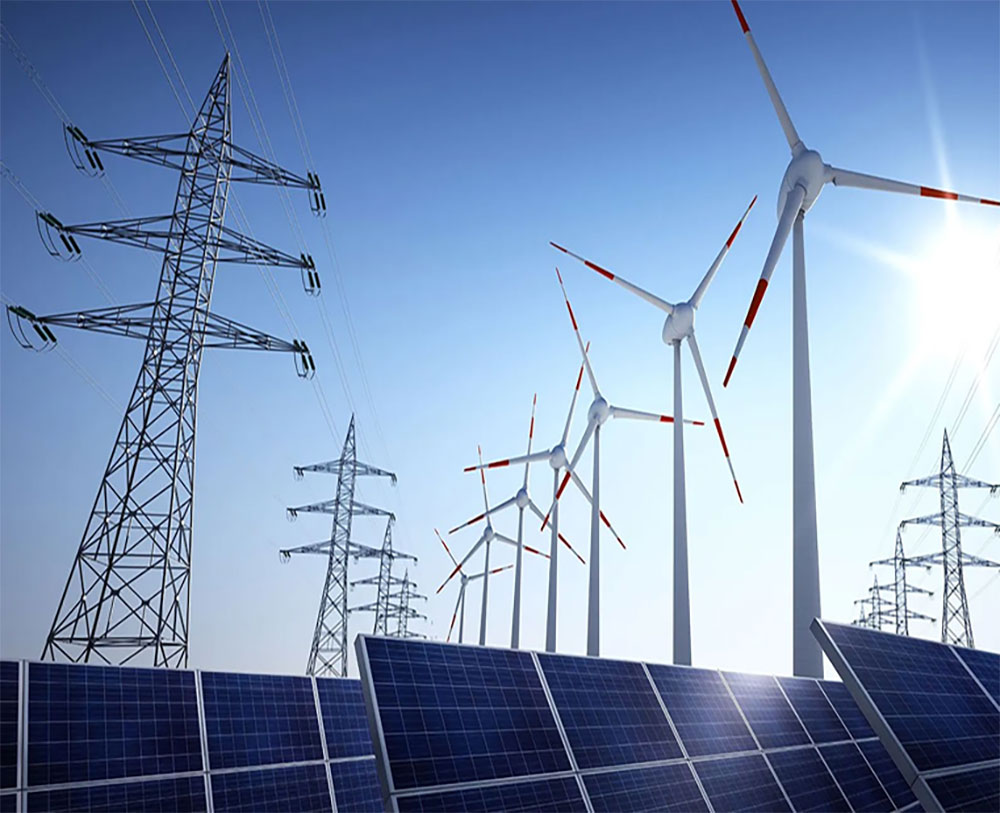
To solve this problem we can use a 100- year -old technology equipment called a Synchronous Condenser.
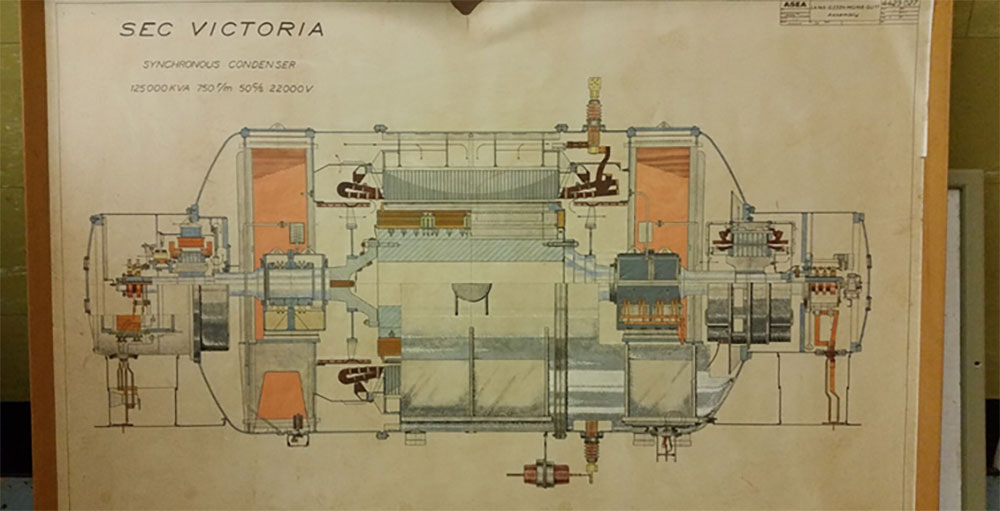
Circa. 1926.
Early Synchronous Condenser made by ASEA (BBC)
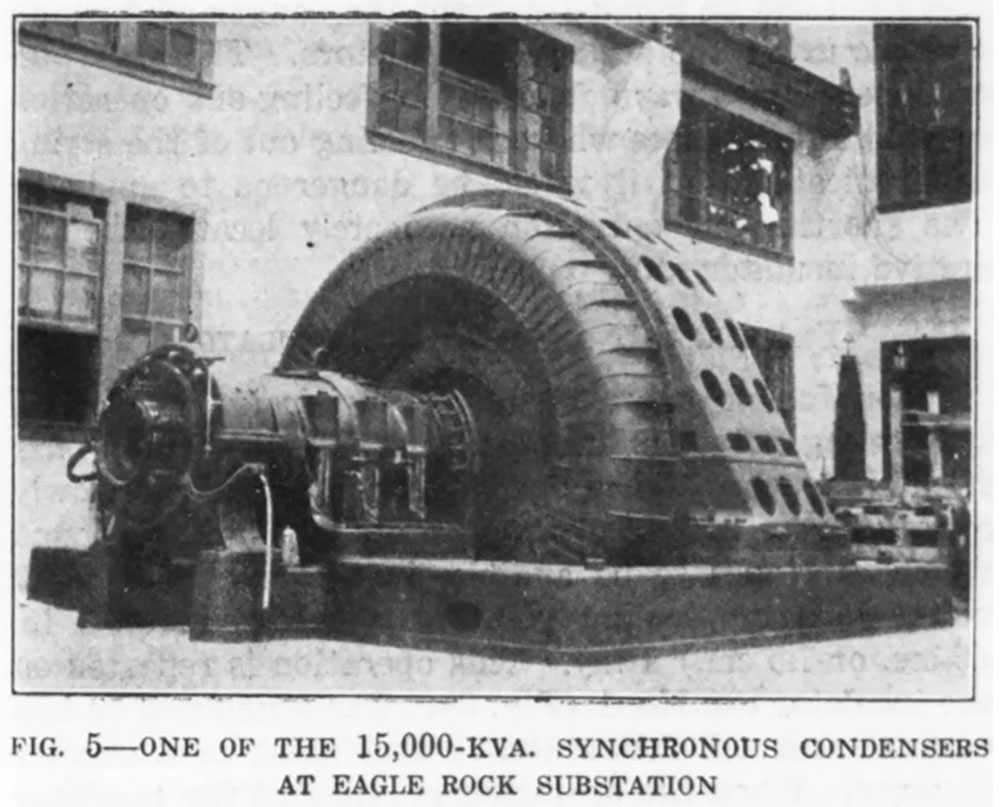
And so what is a Synchronous Condernser (SYNCON) ?
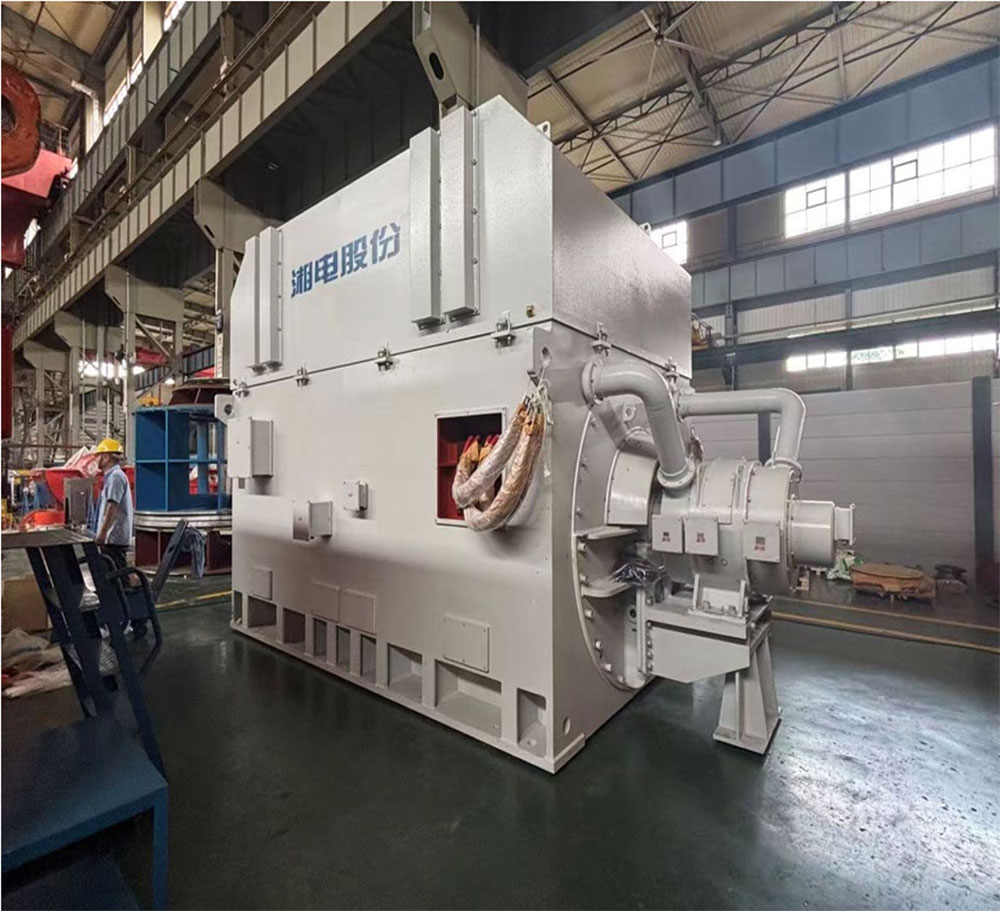
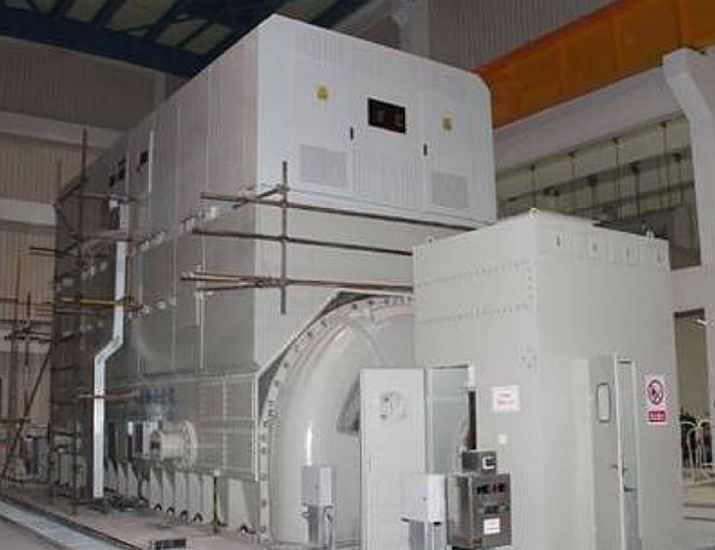
50MVAR SYNCON
SYNCON
A synchronous condenser (also called a syncon ) is essentially a DC-excited synchronous motor whose shaft spins freely without driving a mechanical load
- Unlike conventional generators, it does not convert mechanical energy into electrical energy. Instead, its main purpose is to manage reactive power: by adjusting the excitation current, it can either supply reactive power (over-excited) to boost voltage or absorb reactive power (under
excited) to reduce voltage rise - This capability helps maintain grid voltage stability and improves the power factor of the system
- Unfortunately, over the years , with the discovery of electronics for power factor correction such as Statcom and SVG (Static Var Generator), the industry has stopped using big SYNCON equipment as it is more costly than the cheaper Electronics based SVG. However replacing the Synchronous condenser brings on another set of problems which only can be
solved by using SYNCON.
VOLTAGE FLUCTUATION
When the voltage of the system decreases , the SYN con generates Reactive power to increase the voltage and absorbs Reactive power when the system voltage increases . This is very useful when Renewable energy sources are present on the system as the loading and generation is ever changing . Example Solar and Wind power.
Power Factor Correction
The SYNCON is able to improve the Power factor of the system by generating Reactive power . Unlike Statcoms or SVC that generate the reactive power only in fixed quantities, the SYNCON can do so with varying amounts instantanously.
Improvement of PF means less energy waste and better grid efficiency.
INERTIA ON THE GRID
Analogy
A grid with many small RE generators or wind power, (without the big power plants), likens to the numerous small rivers on the land. The huge river source likens to that of big coal power plant or the Oil power plants.
When a big boulder falls in the path of a huge river, the river water continues on its path with the same velocity. However when the same boulder falls into a tiny river, the flow stops and the “system” crashes.
This falling of the boulder likens to a disturbance (System Fault ) on the transmission grid. Without the large conventional power plants, the grid will crash. By adding the synchronous condensers to a grid having lots of renewable energy generation, we improve the strength and inertia, allowing the grid to continue to operate in a stable fashion when the disturbance occurs. The inertia that was once provided by the Rotating masses of the generators in the Coal power plants is now absent ., it has to be provided by another source such as a SYNCON
Frequency Changes
The SYNCON is therefore able to provide the inertia (adding Resistance to frequency changes) that is necessary to control the frequency changes of the grid brought about by RE energy sources. Thus making the Grid more resilient.
Short Circuit Power
Short Circuit power or Fault MVA can also be provided by the Syn Con which is needed for the correct operation of the relays . When a fault happens on a system, Short circuit power is generated by the SYNCON immediately.
Summarising ,The advantages of a synchronous condenser include the following.
- It can boost system inertia.
- Short-term overload capacity can be increased.
- Low-voltage ride-through.
- Quick response because of modern digital control in dispatch of the Reactive power, when sudden voltage collapse due to fault incidence
- Extra short-circuit strength.
- There are no harmonics.
- The reactive power is continuously adjusted.
- It is maintenance-free.
- A high amount of security can be maintained.
- It has a high lifetime.
- The faults can be easily removed.
- The magnitude of current drawn through the motor can be easily changed by changing
the field excitation with any amount. So this helps in attaining step-less power factor control. - The thermal stability of motor windings is high for short-circuit currents.
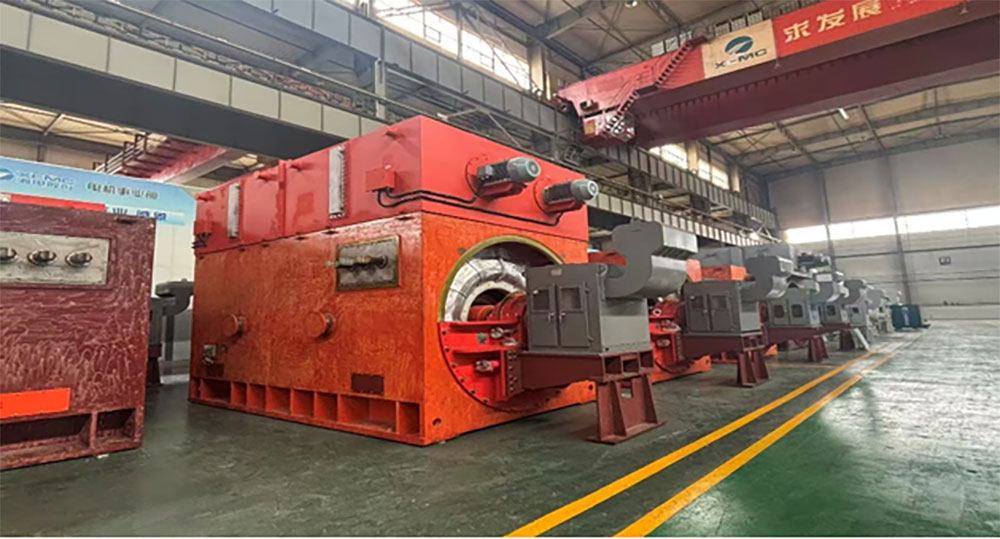
Applications
Summaring, the uses or applications of synchronous condensers include the following.
- HVDC, Wind or Solar, Grid Support & Regulation, Data Centres where there is huge voltage fluctuation.
- SYNCONS are also used at both transmission & distribution voltage levels to enhance stability & maintain voltages in preferred limits in changing load conditions & contingency situations.
- SYNCONS can also be used in electric power systems for voltage control on long transmission lines, particularly for transmission lines with a fairly high inductive reactance to resistance ratio.
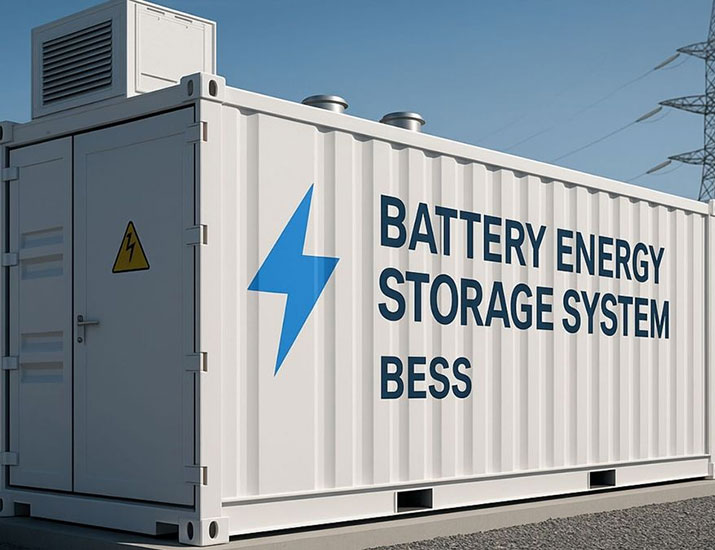
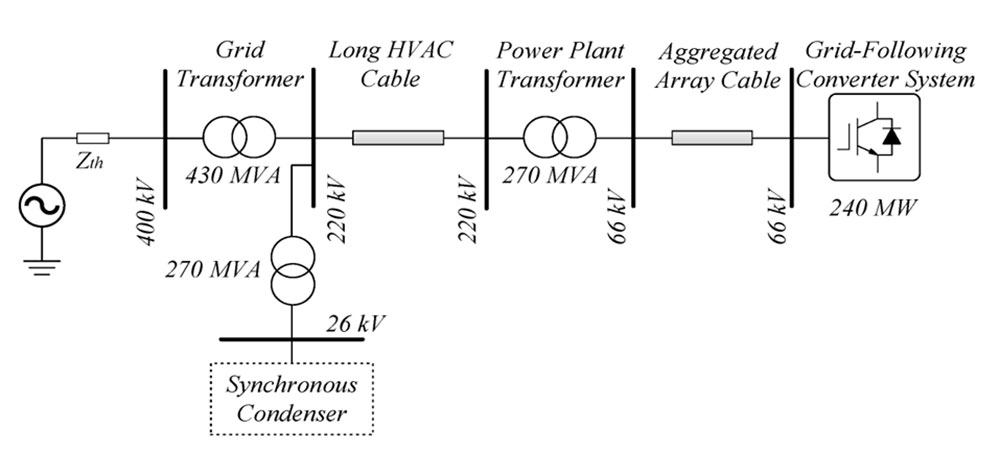
- These condensers are also utilized in hybrid energy systems. Togather with BESS System as below:-
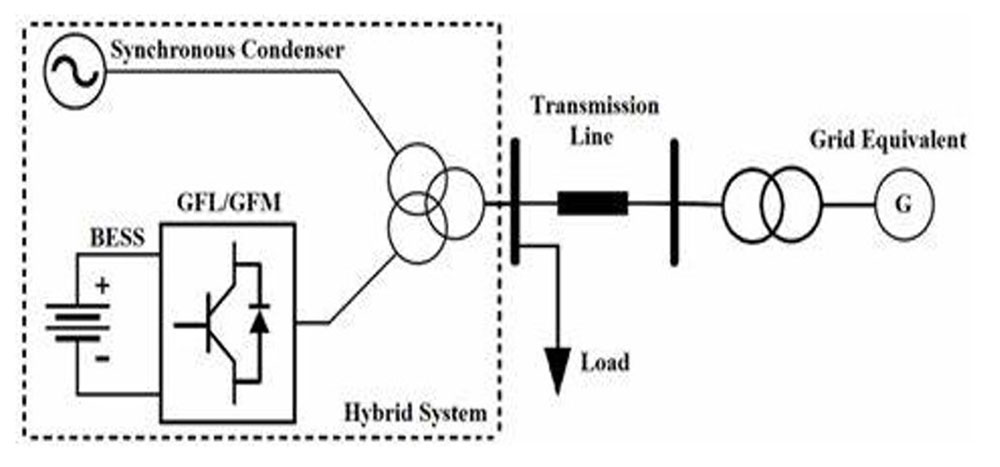
SYNCON WITH BESS – HYBRID SYSTEM
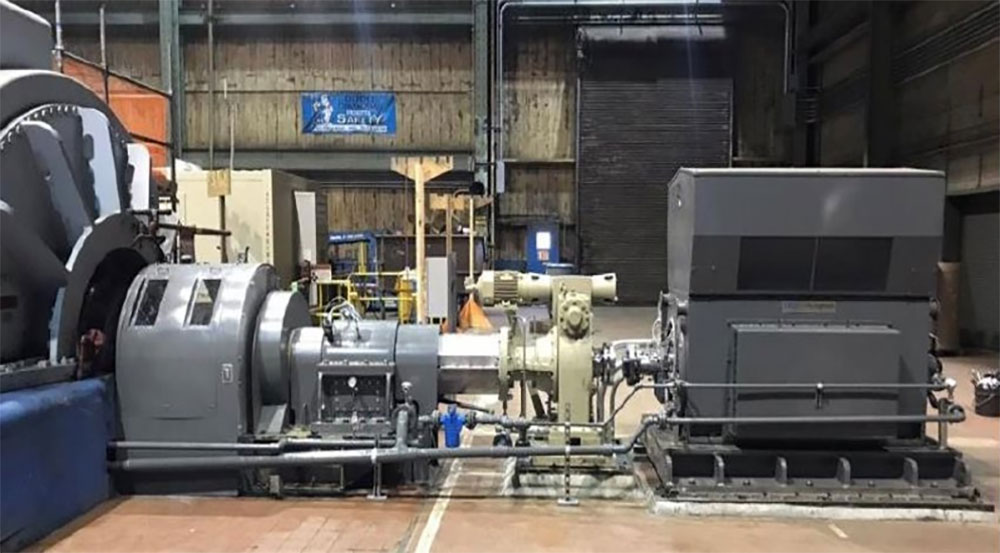
Synchronous Condenser with Pony Motor For Starting
Layout Requirements
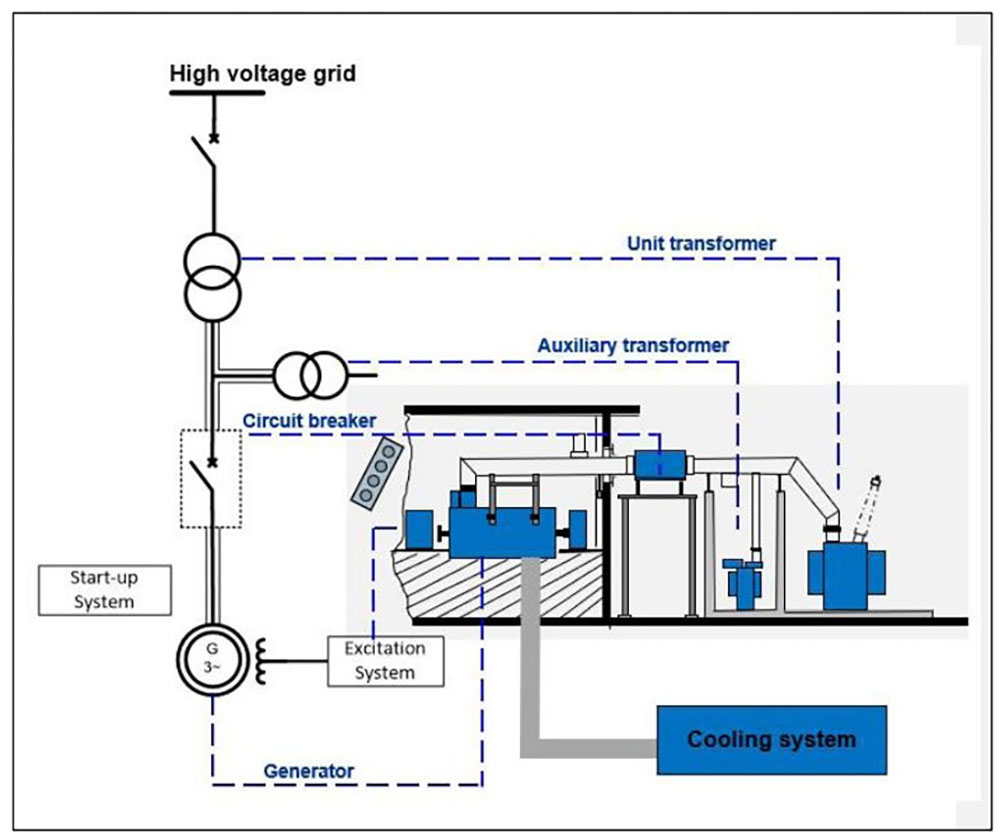
The configuration/layout of a synchronous condenser installation is similar to that of a synchronous generator installation. However, synchronous condenser installations typically require less space than a similarly sized generator due to the removal of prime mover turbine and shaft components. In synchronous condensers, adequate space is required for installation of Flywheel, Static Frequency Converter (SFC) or a pony motor (starter motor) with variable frequency drive (VFD) to bring the machine up to synchronous speed from a standstill state. The major components of synchronous condenser installation are as follows:
- Synchronous Machine
- Excitation System
- Step-up transformer
- Generator Circuit Breaker
- Startup Mechanism
- Isolated Phase Bus Duct (IPBD)
- Auxiliaries
- Cooling System
- Control and Protection System
- Flywheel (as applicable)
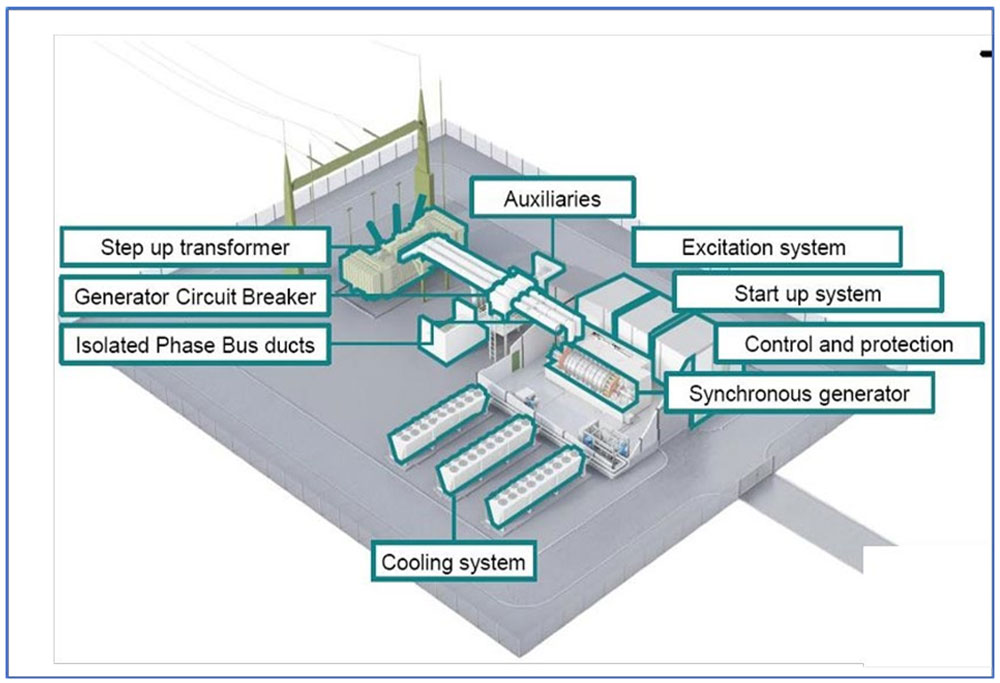
Basic Condenser System With Balance Of Plant
USE OF SYNCON IN DATA CENTRES

With AI coming on stream in a big way, Data Centres are faced with even greater demand of electricity. And this demand of electricity fluctuates widely causing instability to the existing Grid. To stabilise the grid, SynCons can be use to alleviate the problem.
Voltage variations can place stress on critical infrastructure and complicate the process of securing grid connections for new facilities.
As mention earlier syncon provides instantaneous inertia and dynamic reactive power, helping to stabilise voltage and frequency in real time.
In practical terms, this enables the system to absorb sudden load swings and reduce the risk of disturbances spreading across the wider network.
A common solution includes a predefined foundation, synchronous condenser, flywheel, starting system, lube-oil system, configurable cooling options, auxiliaries and an e-house. A noise enclosure is also available as an option.
The flywheel element is added to add Inertia to the network.
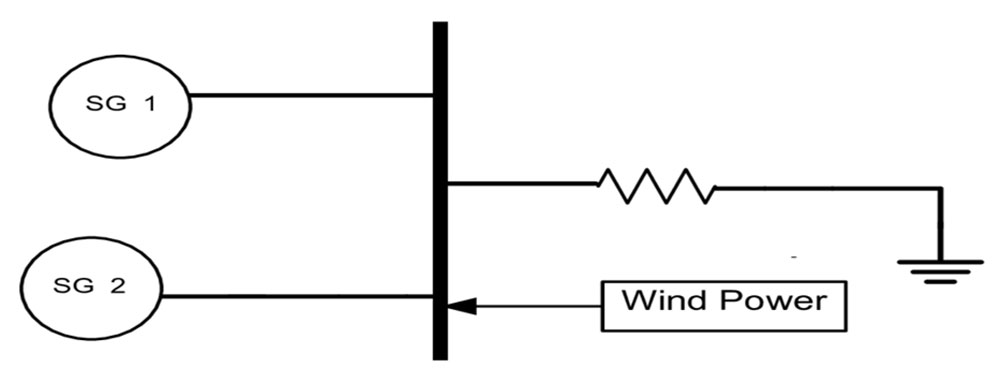
Example: 2 SYNCON Connected to a Wind Power Turbine
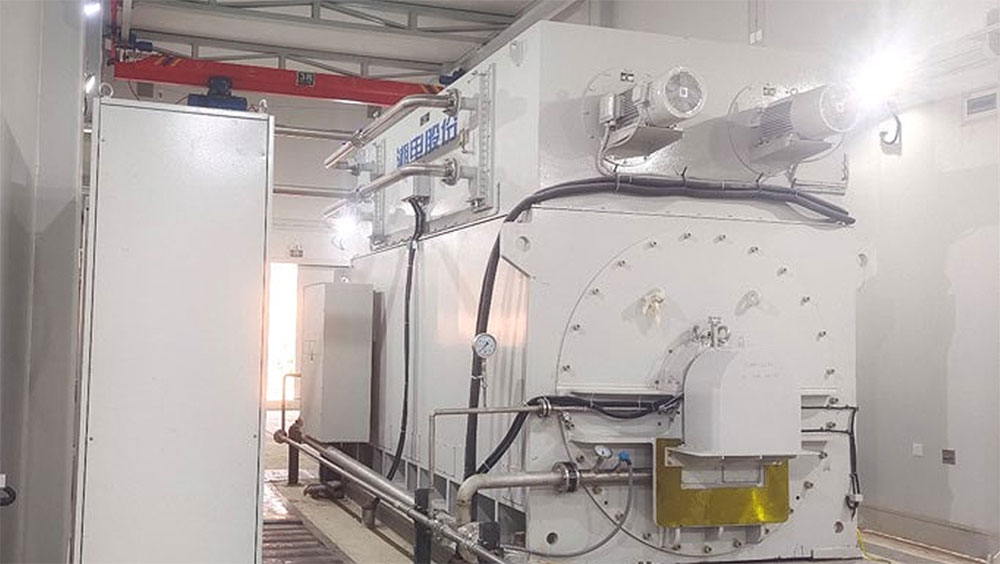
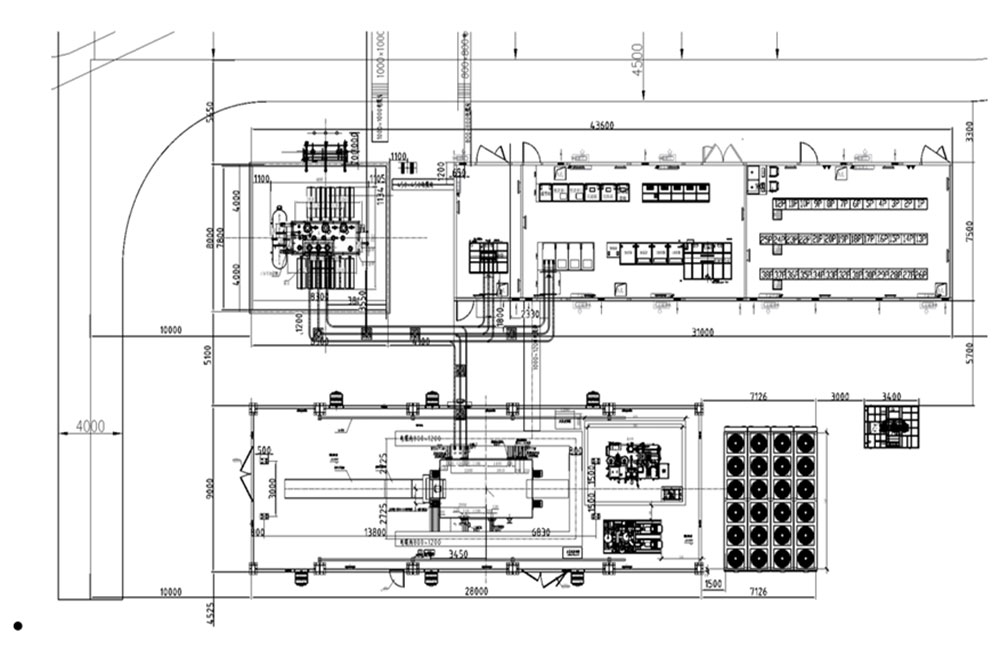
50 MVAR SYNCON (30m X 50m )
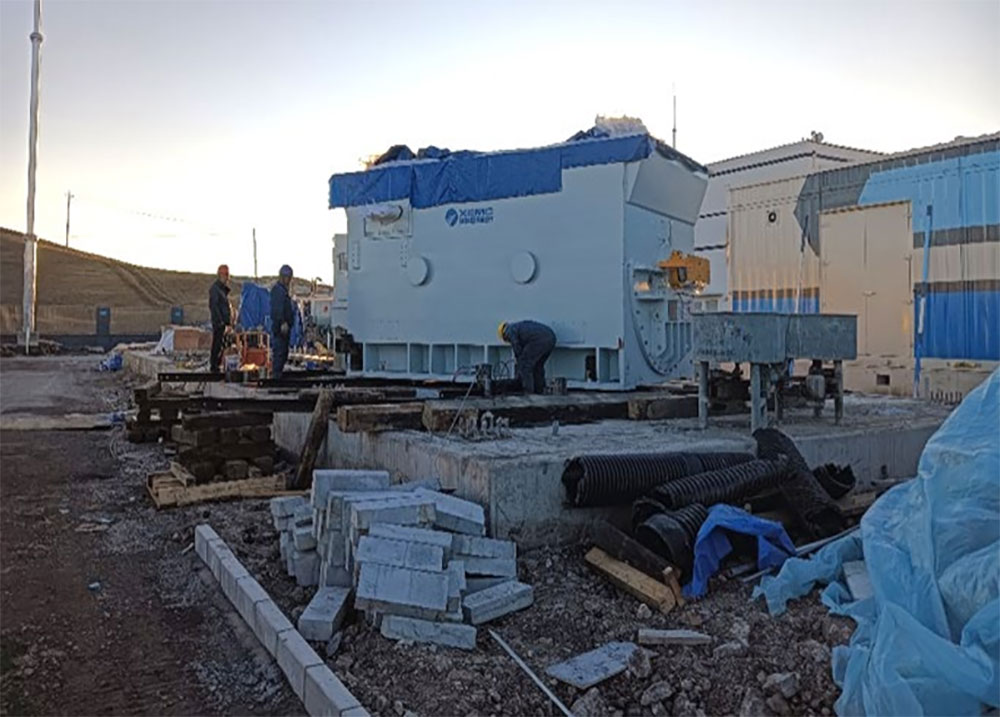
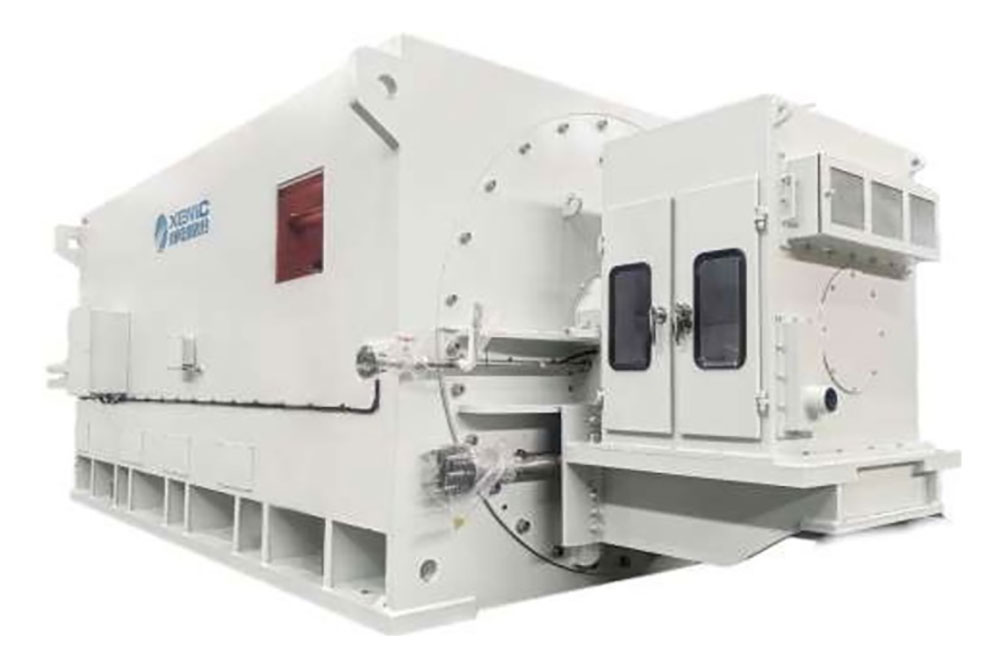
SYNCON DELIVERED TO SITE
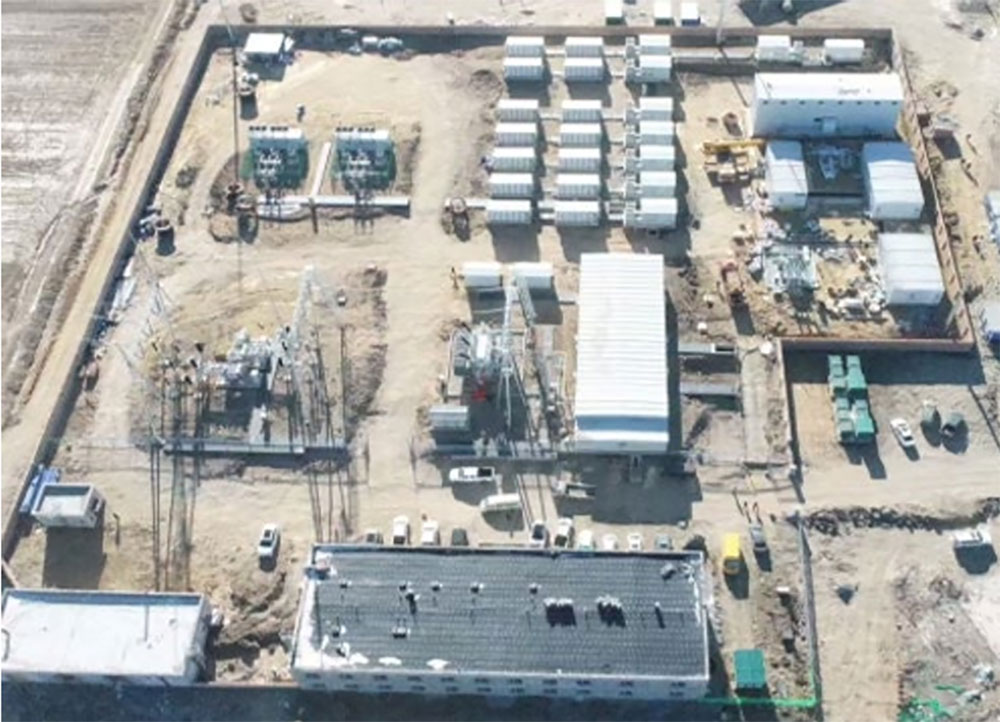
OVERALL VIEW OF SYNCON AND BOP
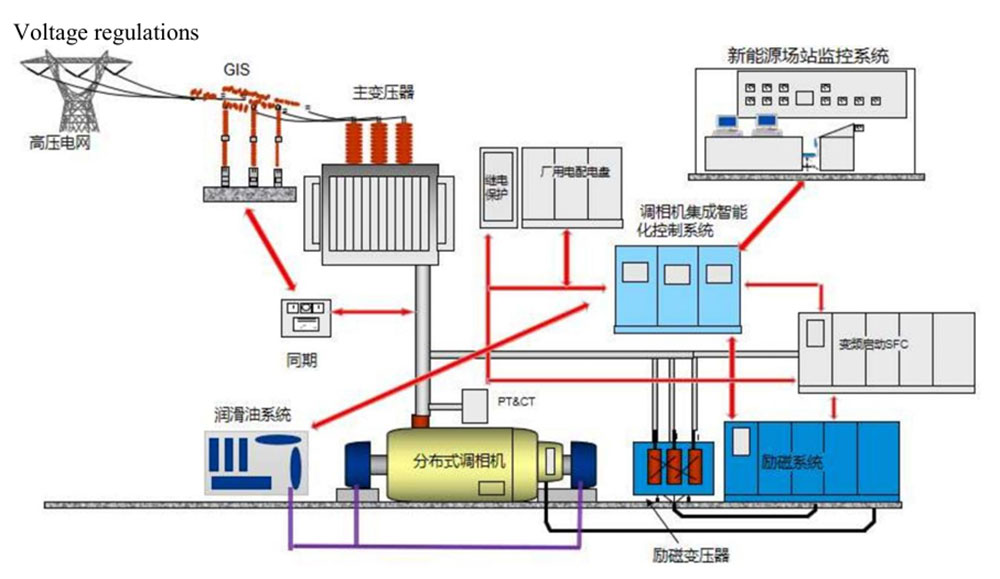
CONNECTION OF A SYNCON TO THE SYSTEM
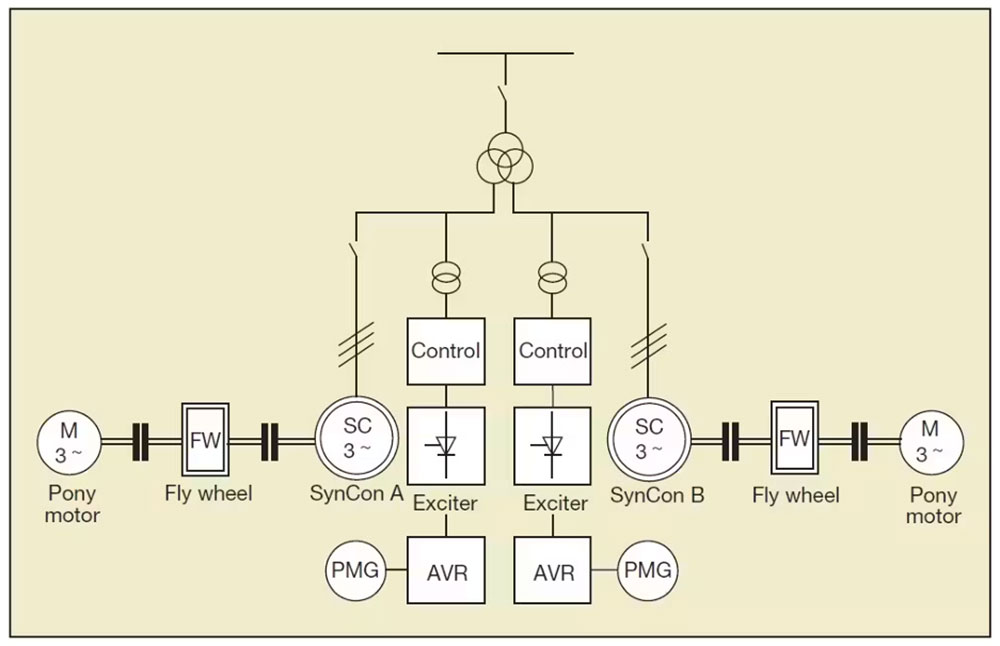
The syncon is field control by the exciter,the Syncon is connected to a Pony motor for starting. The latter revs up the Syncon and once it is synchronise to the Grid , the breaker upstream closes. This causes the flow of reactive power both importing and exporting where the need arises.
LEGEND
SC -Syncon
Note
The Syn Con can also be connected to a Flywheel to increase the Inertia to the grid system.
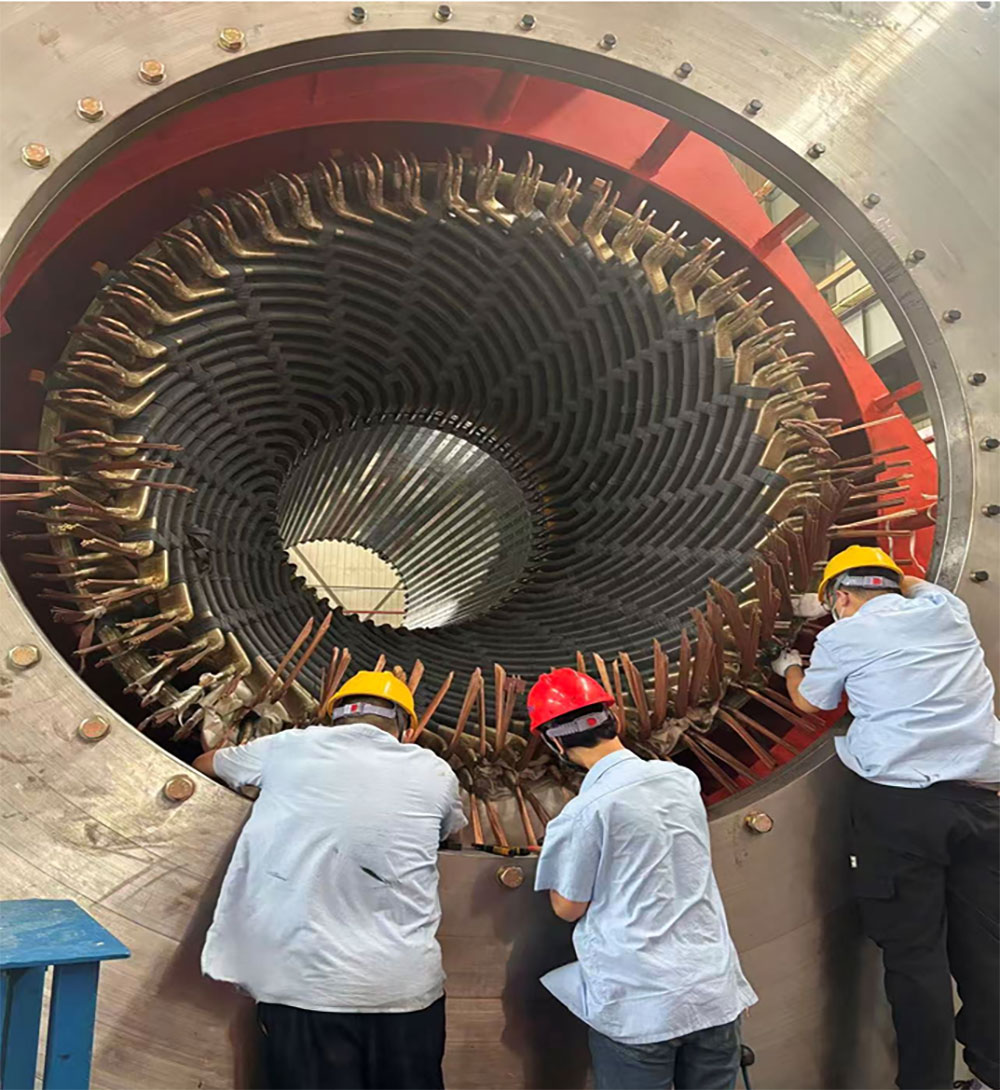
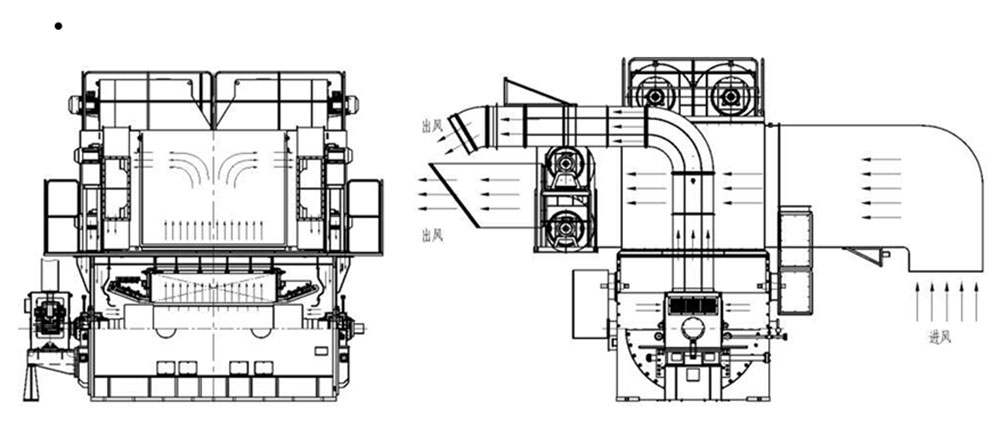
AIR VENTILATION SYSTEM
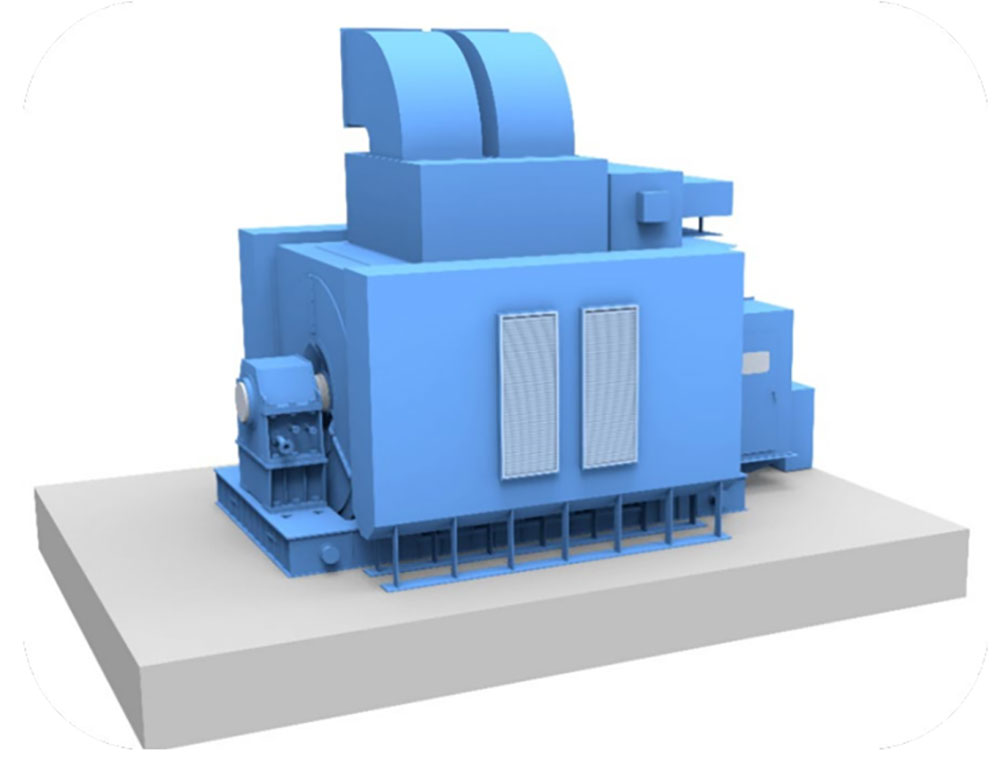
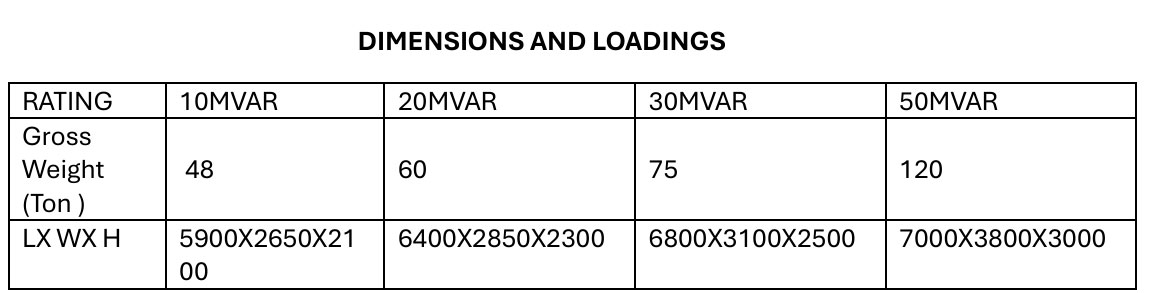
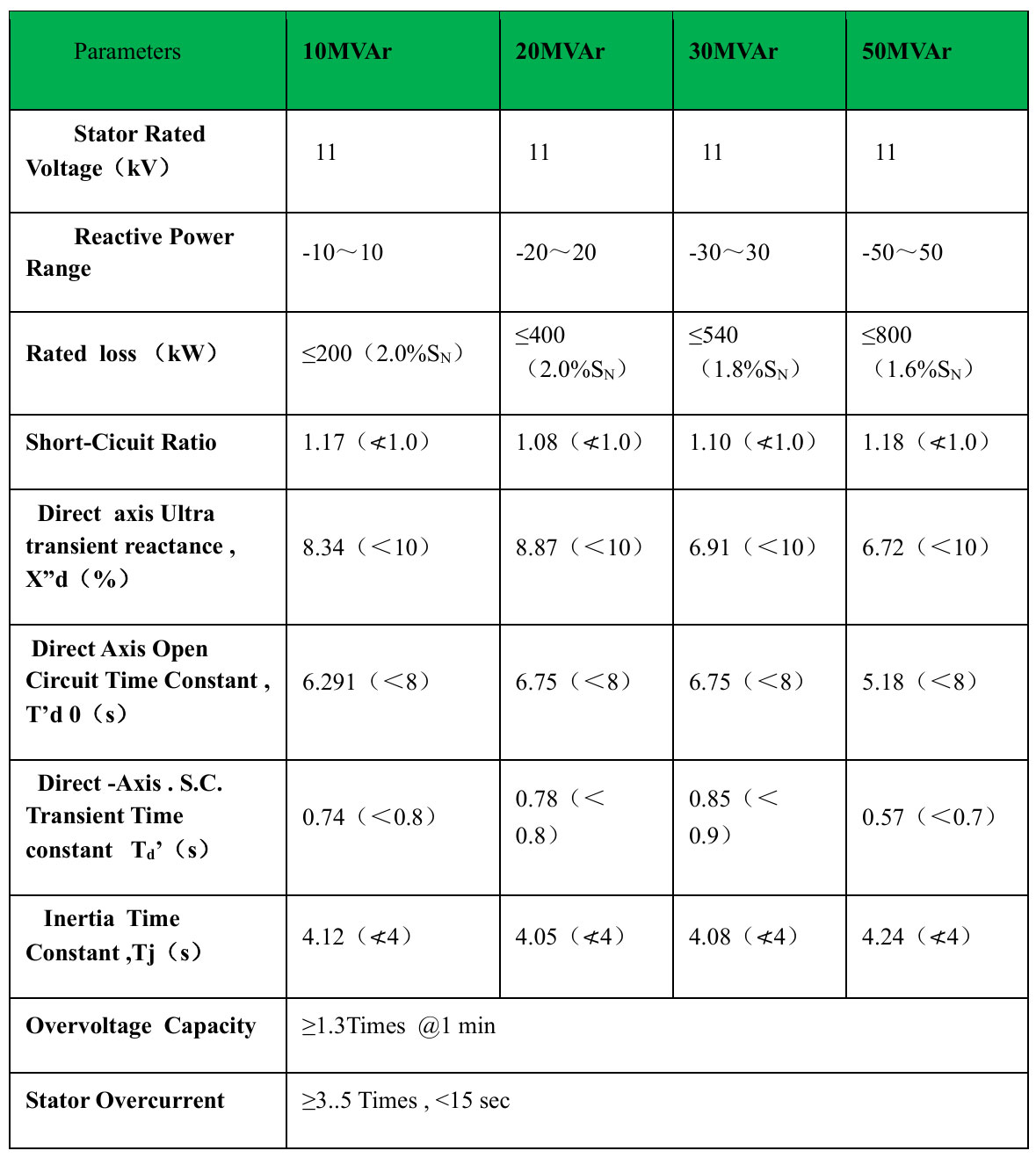
TECHNICAL PARAMETERS
INFORMATION REQUIRED ON ORDERING
Power System Data
- Power System Studies and modelling
- R source and X source of the grid
- Short Circuit MVA/Short Circuit ratios of nodes
- Maximum and minimum grid voltage variations
- X/R ratio of the network at point of interconnection (POI)
Environmental conditions
- Maximum and minimum ambient temperature
- Altitude
- Humidity
- Seismic Requirements
MANUFACTURER:
Xiangtan Electric Manufacturing Co.,Ltd.
116, RuiBin Street Xiangtan, China
AGENT (SINGAPORE):
POWER T AND D PTE LTD
16 , Third Chin Bee Road, Singapore
Mobile : +65 8205 9704
Please refer to the catalogue for complete product details.